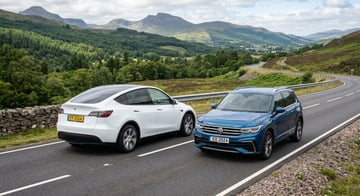


Picture the loan for your car the way the lender sees it. Their question is how much of the loan they could recover if the payments stopped. That might come from the car you're buying, or from another vehicle you already own. If there's neither, they're relying on your income and your word. The vehicle that backs the loan is called its security. The rate the lender offers depends partly on that security. Even what kind of loan it is depends on what secures it.
A car loan is usually secured on the car you're buying. A personal loan for a car is secured on a vehicle you already own, or on nothing at all. Through our panel, a car loan can start at a lower rate than a personal loan, and the car as security can help keep the rate down.
What's the difference between a car loan and a personal loan?
A car loan is a loan to buy a vehicle, usually with that vehicle as the lender's security until it's paid off. A personal loan can pay for many things, a car among them. It can be secured on something you already own, like a car, or it can be unsecured, with nothing behind it.
So both can buy the same car. The difference is what the lender holds while you pay. If you don't keep up the repayments, the lender may be allowed to repossess what is listed as security.
What should you compare when choosing?
Look at four things.
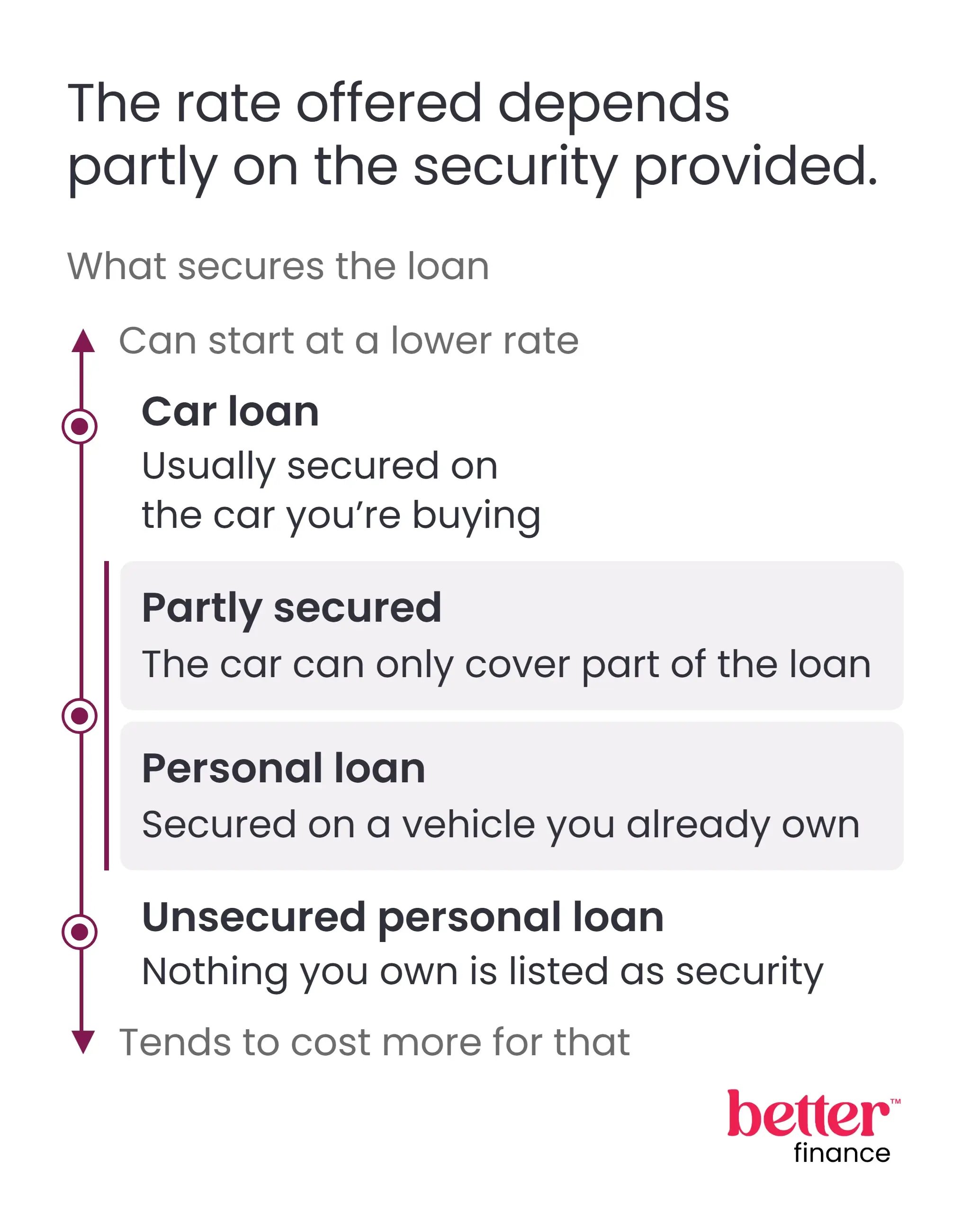
- What secures the loan. The car you're buying, another vehicle you own, or nothing.
- The rate range. The rate offered depends on your circumstances, the amount borrowed and the security provided.
- How much you can borrow, and for how long. Through our panel, more can be borrowed as a vehicle loan than as a personal loan, subject to lender criteria and affordability. Both run from 12 to 84 months.
- The fees. Both have the same list of fees, and we'll show you the applicable fees before you proceed.
One thing matters less than it looks: the name on the loan. A personal loan secured on a car you own can cost about what a car loan does. A car loan for well over what the car is worth can cost more like a personal loan.
Three questions show which loan to start with:
Step 1: Is the car worth about what you want to borrow?
Step 2: Do you own another vehicle outright?
Step 3: Would you rather nothing you own was tied to the loan?
Which is cheaper, a car loan or a personal loan?
At the low end, the car loan: through our panel it starts at 8.00% p.a., against 9.95% p.a. for a personal loan. At the top, both reach 29.95% p.a., because your circumstances count as well as the security.
Car loan | Personal loan | |
What the lender holds | The car you're buying | A vehicle you already own, or nothing |
Fixed rates through our panel | 8.00% to 29.95% p.a. | 9.95% to 29.95% p.a. |
How much | $3,000 to $250,000 | $3,000 to $100,000 |
How long | 12 to 84 months | 12 to 84 months |
Best for | A car worth about what you're borrowing | A car worth less than the loan, or a buyer who wants nothing tied to the loan |
Skip it if | You're borrowing well past the car's value | The car you're buying is worth about what you're borrowing, and you want the lower starting rate |
Rates, amounts and loan lengths from better finance™'s car loan and personal loan pages, as at November 2026. Amounts are subject to lender criteria and affordability.
Unsecured loans may have lower maximums than secured options. If you have suitable security, a secured loan might cost less overall.

"Don't judge a loan on the interest rate alone - the fees can change the real cost quite a bit. Two loans with the same rate can work out very differently once you factor in establishment fees, monthly service fees and any early repayment charges. The number to ask for is the total cost over the full term, not just the rate or the weekly repayment. And check the early repayment terms before you sign, even if you've no plans to pay it off early - life happens, and you'll be glad it's fee-free if it does." - Idrees Hamid
Isn't an unsecured personal loan simpler?
In one way, yes. Nothing you own is listed as security, and some people choose it for exactly that reason. If you don't own a home, don't want to tie up a vehicle, or would rather not put anything up as security, an unsecured personal loan could suit you.
But the lender then has nothing to fall back on. As Consumer Protection puts it, unsecured loans tend to have higher interest rates than a secured loan, as the lender doesn't have the security items as a back-up. And an unsecured loan still has to be repaid in full. So choose it on purpose, knowing what it costs.
What if you're borrowing more than the car is worth?
Then the car can only cover part of the loan. Our advisers call this partly secured, and it sits between a fully secured loan and an unsecured one.
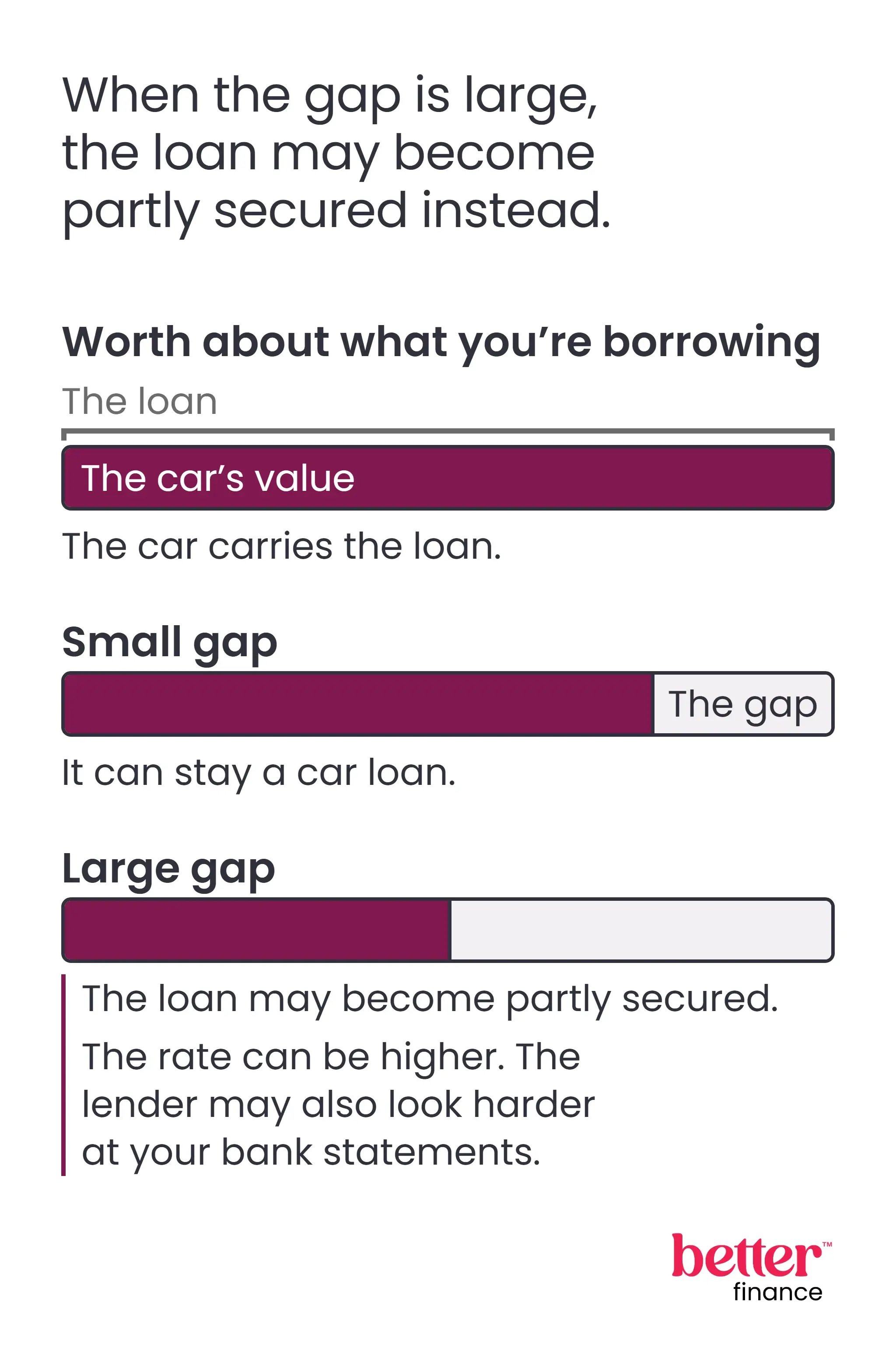
If the gap between the car's value and the loan is small, it can stay a car loan. When the gap is large, the loan may become partly secured instead. The rate on a partly secured loan can be higher than on a fully secured one. The lender may also look harder at your bank statements.
That's why the first questions on the call are about security. Do you want it secured or unsecured? Do you own a vehicle outright, and what's it worth? Those answers show which loan you're really choosing.
When does a personal loan suit a car buyer?
When the car is worth less than you want to borrow, or when you'd rather it wasn't security for the loan.
- You own another vehicle outright. A personal loan secured on it can mean a lower rate than an unsecured one, and the car you're buying stays free of security.
- The car can't cover what you're borrowing. If you're borrowing well past its value, the loan may become partly secured, whether it's called a car loan or a personal loan. Ask what each option would cost.
- You want nothing tied to the loan. An unsecured personal loan keeps every vehicle you own clear of it, and tends to cost more for that.
When is a car loan the better fit?
When the car you're buying is worth about what you're borrowing. The car then carries the loan, and vehicle loans start at a lower rate through our panel. Vehicle loans also go higher through our panel: up to $250,000, against $100,000 for personal loans, subject to lender criteria and affordability.
It suits less well if you're borrowing a good deal past the car's value. The loan may then become partly secured, and can cost more like a personal loan.
Two more questions about car and personal loans
Do lenders assess a car loan and a personal loan differently?
No. Lenders look at your income, expenses and credit history for both. Where either is only partly secured, the lender may look harder at your bank statements.
Does better finance™ arrange both?
Yes. We help arrange finance through our panel of lenders, for vehicle loans and personal loans alike. We're not the lender, so the lender sets the rate and makes the decision.
Before you choose, look from the lender's side
When you look at a car to buy on finance, note three things first: the car's price, how much you want to borrow, and whether you own another vehicle outright. Those are what the lender sees. They decide whether you're looking at a car loan, a partly secured loan or a personal loan.
Bring them to the first call and ask one question: secured, partly secured or unsecured, and what does each cost me? The answer gives you the numbers to compare.
Find out your three numbers. Before you commit to anything, a New Zealand adviser can walk you through your three numbers: what it costs a week, how long for, and the total.
When you apply with us, we start with a soft credit check, which does not affect your credit score. If we submit your application to a lender, that lender may carry out a full credit enquiry, which is recorded on your credit file.
Apply online → or Talk to our team →
Approval is subject to responsible lending inquiries and lender criteria.
better finance™ is a trading name of One Partner Limited (FSP403346), a licensed Financial Advice Provider. We help arrange finance through our panel of lenders — we are not the lender. Approval is subject to responsible lending inquiries and lender criteria.
Vehicle loans: fixed interest rates from 8.00% p.a. to 29.95% p.a. Personal loans: fixed interest rates from 9.95% p.a. to 29.95% p.a. The rate offered depends on your circumstances, the amount borrowed and the security provided. Fees apply, including a lender establishment fee of up to $375 and an introducer fee of up to $995. Lenders may charge a PPSR fee of between $0 and $14, and some lenders charge ongoing or service fees. Full fee information is at better.co.nz.
Vehicle loans from $3,000 to $250,000. Personal loans from $3,000 to $100,000. Terms from 12 to 84 months. The amount and term available to you depend on lender criteria and affordability assessment.
Disclaimer: Please note that the content provided in this article is intended as an overview and as general information only. While care is taken to ensure accuracy and reliability, the information provided is subject to continuous change and may not reflect current developments or address your situation. Before making any decisions based on the information provided in this article, please use your discretion and seek independent guidance.