

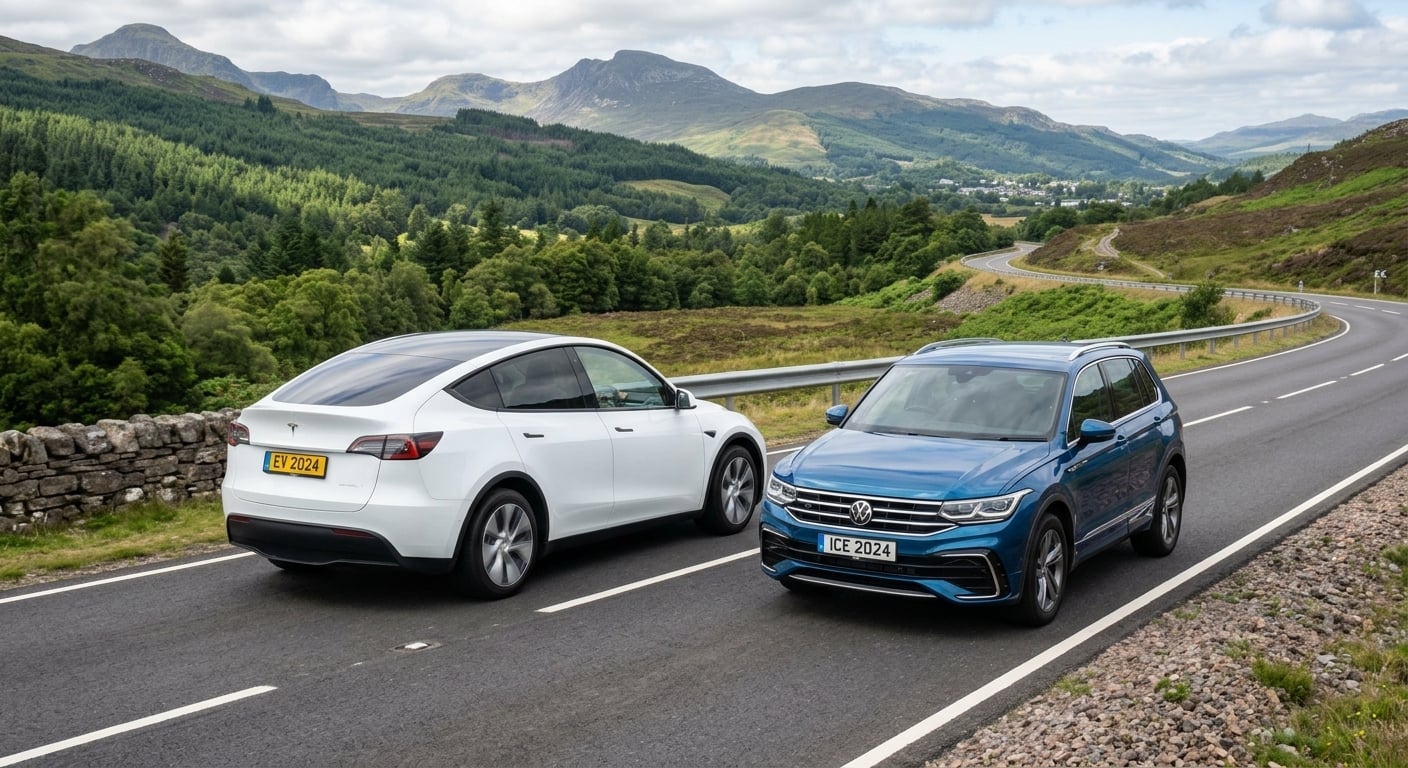
Modern car buyers have lots to think about. Not just whether you want a hatchback or a sedan, a 4WD or a car that’s easy to park in small spots, but also whether you want an electric vehicle or one that runs on petrol.
EVs have become increasingly popular in recent years, as rising fuel prices have made people wonder whether they’re a more cost-effective option. EVs may cost more to buy upfront, but there is evidence they are cheaper to run over time.
When you’re thinking about taking vehicle finance, it makes sense to look at more than just your loan repayment, and think about the total cost that you’ll pay over the life of your loan.
In this guide, we’ll show you how to compare the overall financial impact of borrowing for an EV compared to a petrol car, so you can make a more informed decision.
How much do you need to borrow?
As a starting point, the purchase price of your vehicle usually determines how much you need to borrow. This then flows on to how much your repayments will be and the total interest you will pay over the life of your loan. EVs are typically a bit more than $10,000 more expensive than a similar model of petrol car.
There can be a lot of variation, though, and things like the vehicle’s age, brand, model, battery size, battery health and specifications can all affect the cost of an EV.
But EVs tend to need less maintenance than their petrol counterparts, so you may not need to worry about having as much money set aside to pay for that. While you might have to pay to set up a charging facility at home, you won’t be paying for petrol.
A higher purchase price may not automatically mean the vehicle costs more over the time you own it.
The Government’s Clean Car Discount, which offered rebates for low- and no-emission vehicles, ended at the end of 2023.
How does EV vs petrol car financing compare?
Whether you’re buying a petrol car or an EV, the process of financing the purchase is likely to be quite similar. What affects your repayments are the amount you’re borrowing, the interest rate, the loan term and whether you have a deposit.
A higher amount borrowed usually means your repayments are higher and you pay more interest over the term of the loan.
For example, if you finance a $35,750 EV over four years, at an interest rate of 12.95 percent, you’ll pay about $226 a week in repayments, according to our calculator, and a total of $47,040 to clear the loan. A $20,000 loan over the same period of time and with the same interest rate would cost $129 a week and a total of $26,784.
But if the more expensive EV doesn’t cost you anything in maintenance in that time, while the petrol vehicle costs $1000, and you are able to charge your car at home rather than pay thousands of dollars for petrol, the balance may start to tip again.
Running costs
Buyers often forget about the ongoing costs of owning a vehicle, but they can add up to a large proportion of your household budget, so it’s important to include them in your comparisons.
Electricity vs petrol
Households buying fuel typically spend at least $100 to $150 a week doing so, if they are a two-car household. A Kia Earth, as an example, charged on an overnight rate at home, might cost about $400 to charge a year, based on 12,775 kilometres of travel a year.
It’s been estimated a petrol Mazda CX5 would cost $20.72 per 100 kilometres at a petrol price of $2.80 compared to $3.13 for a Tesla model 3.
Servicing and maintenance
EVs do generally have fewer moving parts, so they don’t require as much maintenance but still need some servicing.
You’ll need to think about things like tyres and steering issues, as well as checks on your battery health.
Road User Charges (RUC)
Since April 1, 2024, light electric vehicles and plug-in hybrids have had to pay road user charges, in the same way that diesel vehicles do. That’s different from petrol cars, which pay fuel excise at the pump each time they fuel up.
A full EV pays $76 per 1000 km in RUCs. Plug-in hybrids pay $38 per 1000km but they also pay fuel excise tax on any petrol that they use.
RUCs are prepaid in 1000km blocks with an admin fee. It’s important to keep these up to date because you can’t register a vehicle with overdue RUCs.
Insurance
You’ll also need to factor in the cost of insurance. This varies according to the value of the vehicle, the driver’s history, where you live and the type of cover you have.
| Mazda CX5 | Tesla 3 |
| Purchase price: $26,999 | Purchase price: $63,900 |
| Loan repayments: $172 a week over 48 months | Loan repayments: $400 per week |
| Total paid: $35,808 | Interest paid: $83,376 |
| Fuel: $20.72 per 100km | Fuel: $3.13 per 100km |
| Servicing: $1000 a year | Servicing: $500 |
| RUCs: Nil, fuel excise tax paid at pump | RUCs: $76 per 1000km |
| Insurance (illustrative): $1200 a year | Insurance (illustrative): $2346 to $2948 a year, depending on location and insurer. |
Which option may suit you?
Cost is just one part of your decision about which vehicle is likely to be right for you. When you’re thinking about an EV, you’ll also need to consider things like your access to chargers, your driving habits and what you want from your vehicle.
An EV could suit people who drive regularly and have convenient home or public charging available to them. It may be even more economical if you have solar panels on your home and can charge your vehicle from those. EVs may be more appropriate for people who plan to keep their vehicle for several years and don’t mind making a larger upfront investment.
Petrol vehicles may be suitable for people who have a smaller upfront budget, travel long distances where it may be hard to charge a vehicle, or want to choose from a wider range of options.
There’s no one right answer, and the appropriate solution will depend on your individual needs, budget and circumstances.
Top tips
- Compare the cost of ownership: It’s more than just the purchase price. What will you pay in fuel, maintenance and ongoing ownership costs?
- Check how the repayments fit your budget: What can you comfortably afford?
- Compare your finance options: We can help you to look at what is available and what might be appropriate for you.
- Understand all fees and loan terms before you sign: We can also go through the loan agreement with you to ensure you fully understand what is involved.
- Choose a loan term that works for you: A shorter loan term may mean higher repayments but a lower cost of borrowing overall. A longer term may make repayments easier but could increase your cost of borrowing.
If you’re wondering what might work, give us a call. Our team of personal loan experts can help with any questions you may have.
Frequently Asked Questions (FAQs)
Is it more expensive to finance an EV than a petrol car?
No. If it’s more expensive to purchase an EV, you may end up with a larger loan, but the loan won’t be more expensive just because you’ve bought an EV.
Do EVs always cost less to own?
No. While in general, EVs have fewer moving parts, which means fewer things to go wrong, problems with batteries can be expensive.
Are EV loan repayments higher?
Your lender may have a limit as to how old they are happy for your EV to be while you’re paying it off. In that situation, you may have higher repayments to clear the EV loan in a shorter time.
What affects the total cost of financing a vehicle?
Purchase cost, interest rate and loan term all play a role in how much a loan costs.
Are road user charges included in a car loan?
No, you’ll need to pay these separately as you use your vehicle.
Should I compare running costs before applying for finance?
Definitely. The running costs and how you’ll factor them into your budget are an important part of how the finances work.
Can I finance a used EV?
Yes, you can. We can help you find an appropriate lender.
Does the loan process differ for EVs and petrol cars?
Does the loan process differ for EVs and petrol cars?
There is not a huge difference. Lenders may inquire about the battery health of any EV you’re considering.